Science Posts
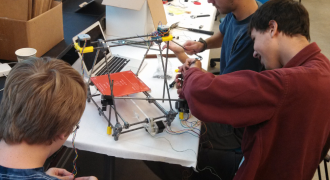
Guest Blog: Circumventing Science Lab Budget Cuts with Open-Source Hardware
High-school science teachers can radically reduce the cost of building up science labs while giving students opportunities to engage in genuine design processes by introducing them to open-source hardware. A vast collection of free and pre-designed low-cost scientific tools are available, many of which can be printed on a open-source 3D printer, including the printer itself. Not only can students benefit from access to research grade equipment, there are ample opportunities for students to build on, improve, and customize scientific tools as part of their curriculum. In this way the number and value of the open-source hardware designs can expand with student effort, enabling a powerful motivating factor for science education.
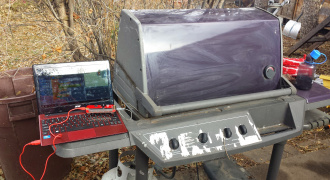
Turkey Scratch -- Thanksgiving, Programming, and a 'lil Data
Happy Thanksgiving everyone! Check out this quick little hack using a standard temperature probe from my oven thermometer, our PicoBoard, and a little creative coding in Scratch!
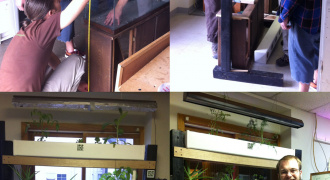
Enginursday: Solving Real-World Problems with Data.SparkFun.com
Learn how data.sparkfun.com can help you not just collect data, but also use that data to make hypothesizes, see trends, and make adjustments to a variety of systems.
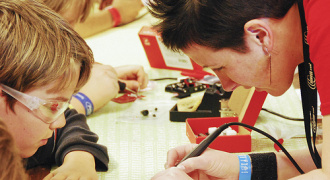
Can Soldering Help Therapy Patients?
Dr. Kristi Pikiewicz discusses introducing some of her therapy clients to soldering as a way to calm and focus themselves. Yet another reason to involve kids in DIY projects?

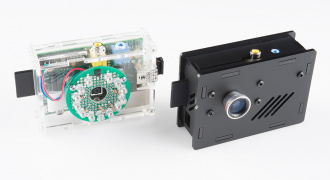
Enginursday: Time-lapse with the Raspberry Pi Pt. 2
The next chapter in the Raspberry Pi Aquaponics Time-laspe project.
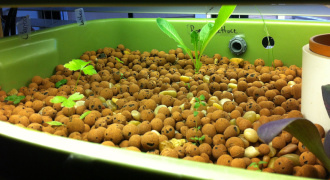
Enginursday: Time-lapse with the Raspberry Pi
How to create a simple and cheap time-lapse rig with the Raspberry Pi.

Engineering Roundtable - Aquaponics
Joel shows us how to build a handheld pH sensor to regulate his aquaponics system.