Add High-Precision GNSS, Sensors, and Robotics Functions to your NVIDIA Jetson Orin Nano Super Developer Kit

Extend the functionality of your NVIDIA Jetson Orin Nano with SparkFun pHATs and the Qwiic connect ecosystem - no soldering or breadboarding required!
The NVIDIA Jetson Orin Nano Super Developer Kit packs a lot of performance into a small single-board computer, but it becomes much more interesting when it can collect sensor data and interact with the physical world. That's where SparkFun pHATs and the Qwiic ecosystem come in.
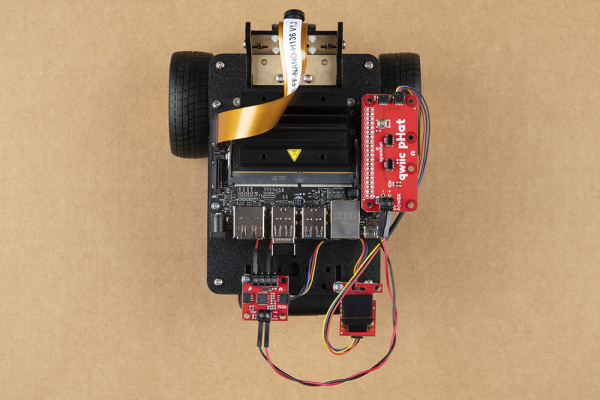
The Jetson Orin Nano Developer Kit includes a familiar 40-pin expansion header that can be used to connect compatible SparkFun pHATs. Depending on the pHAT, you can easily add Qwiic sensors, servo control, robotics functionality, high-precision GNSS, and other hardware to your Jetson project. Note: the pHATs are also compatible with Raspberry Pi boards that have the 40-pin header.
Add High-Precision Positioning to Jetson with GNSS Flex pHATs
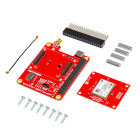
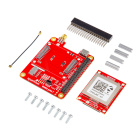
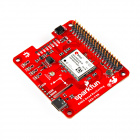
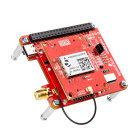
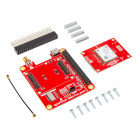
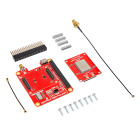
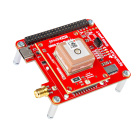
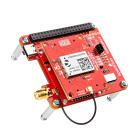
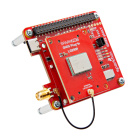
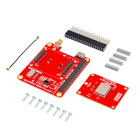
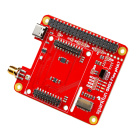
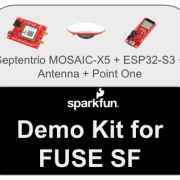
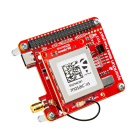
The SparkFun GNSS Flex pHAT ecosystem is a modular system that makes it easy to add high-precision GNSS positioning to the NVIDIA Jetson Orin Nano. The Flex pHAT connects directly to the Jetson’s 40-pin header and accepts interchangeable SparkFun GNSS Flex modules, allowing developers to select the best module for their application: mosaic-X5, LG290P, mosaic-G5 P3, ZED-X20P, LG580P, or the DAN-F10N. Here is a quick comparison of these modules.
Paired with the Jetson Orin Nano, the system combines the Jetson’s AI, computer vision, and edge-computing capabilities with precise real-world position and timing data. This makes the combination particularly useful for autonomous robots, machine vision, precision agriculture, mapping, drones, and other edge-AI applications that need to understand not only what they're seeing, but precisely where they are. Here is a video demo of the modules in use with the Raspberry Pi - very similar process for the Jetson Nano.
Add Sensor Capability to Your Jetson with the Qwiic Ecosystem
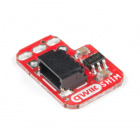
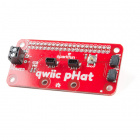
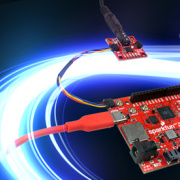
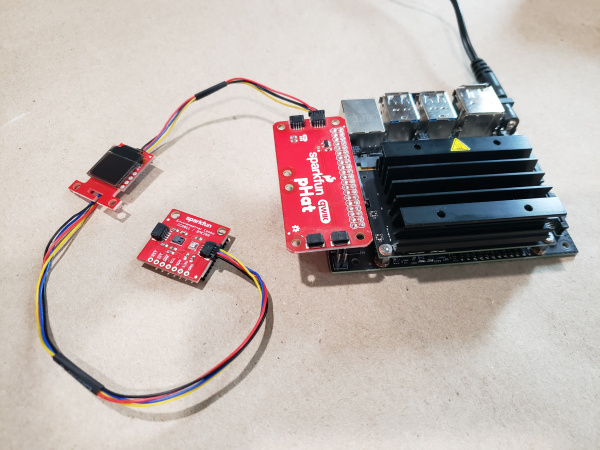
The SparkFun Qwiic ecosystem is a solderless, polarized I²C connection system that makes it easy to add sensors and other peripherals without breadboarding, manual wiring, or soldering. Using the SparkFun Qwiic pHAT, the NVIDIA Jetson Orin Nano can connect directly to Qwiic devices, with multiple sensors daisy-chained together on the same I²C bus. You can also add a Qwiic connector directly to your Jetson board with the Qwiic Shim.
This gives the Jetson Orin Nano an easy way to sense and interact with the physical world. Developers can add environmental, distance, motion, presence, air-quality, radar, magnetic, and other sensors, then combine that real-world data with the Jetson’s AI and edge-computing capabilities. The result is a powerful platform for robotics, intelligent monitoring, autonomous systems, machine vision, and sensor-driven AI, without needing to design custom sensor-interface hardware first. Here is a helpful tutorial on how to do this.
Add Robotics Functionality to Your Jetson with the Auto pHAT
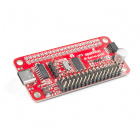
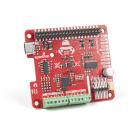
The SparkFun Auto pHAT is an all-in-one robotics expansion board that adds motor control, servo control, motion sensing, and sensor expansion to the NVIDIA Jetson Orin Nano. It can drive two DC motors with encoder feedback and up to four servo motors, while an onboard ICM-20948 9DoF IMU provides acceleration, rotation, and magnetic-field sensing. A Qwiic connector also makes it easy to add distance, environmental, proximity, and other sensors.
Paired with the Jetson Orin Nano's AI and computer-vision capabilities, the Auto pHAT provides the hardware needed to turn AI decisions into physical movement. Four servo channels are useful for mechanisms such as robotic arms and grippers, steering systems, pan/tilt cameras, sensor positioning, and other multi-axis mechanisms, while the two motor channels can provide drivetrain control for a mobile robot. This makes the combination particularly well suited for autonomous rovers, AI-powered robots, vision-guided vehicles, and other physical AI applications where the Jetson needs to sense, decide, and act.

Add Servo Control to Your Jetson with the Servo pHAT
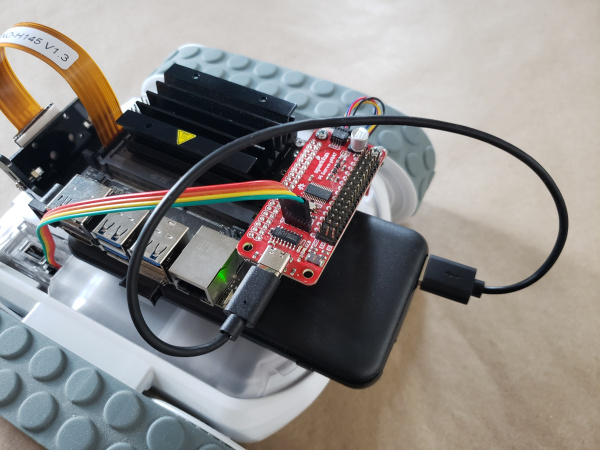
The SparkFun Servo pHAT allows NVIDIA Jetson Orin Nano to control up to 16 servo motors in a straightforward and uncomplicated manner via an I2C connection. Its onboard PCA9685 provides 16 independent PWM channels, offloading servo timing from the Jetson while preserving GPIO pins for other hardware. The board also includes USB-C power for supporting the higher current demands of multiple servos and a Qwiic connector for adding sensors alongside the servos.
Adding this many servos turns the Jetson from an AI computer into a platform capable of complex physical movement. Multiple servos are useful for robotic arms and grippers, multi-jointed or walking robots, animatronics, camera pan/tilt systems, and other mechanisms with many independently controlled axes.
Quick Links to SparkFun pHATs
$649.95